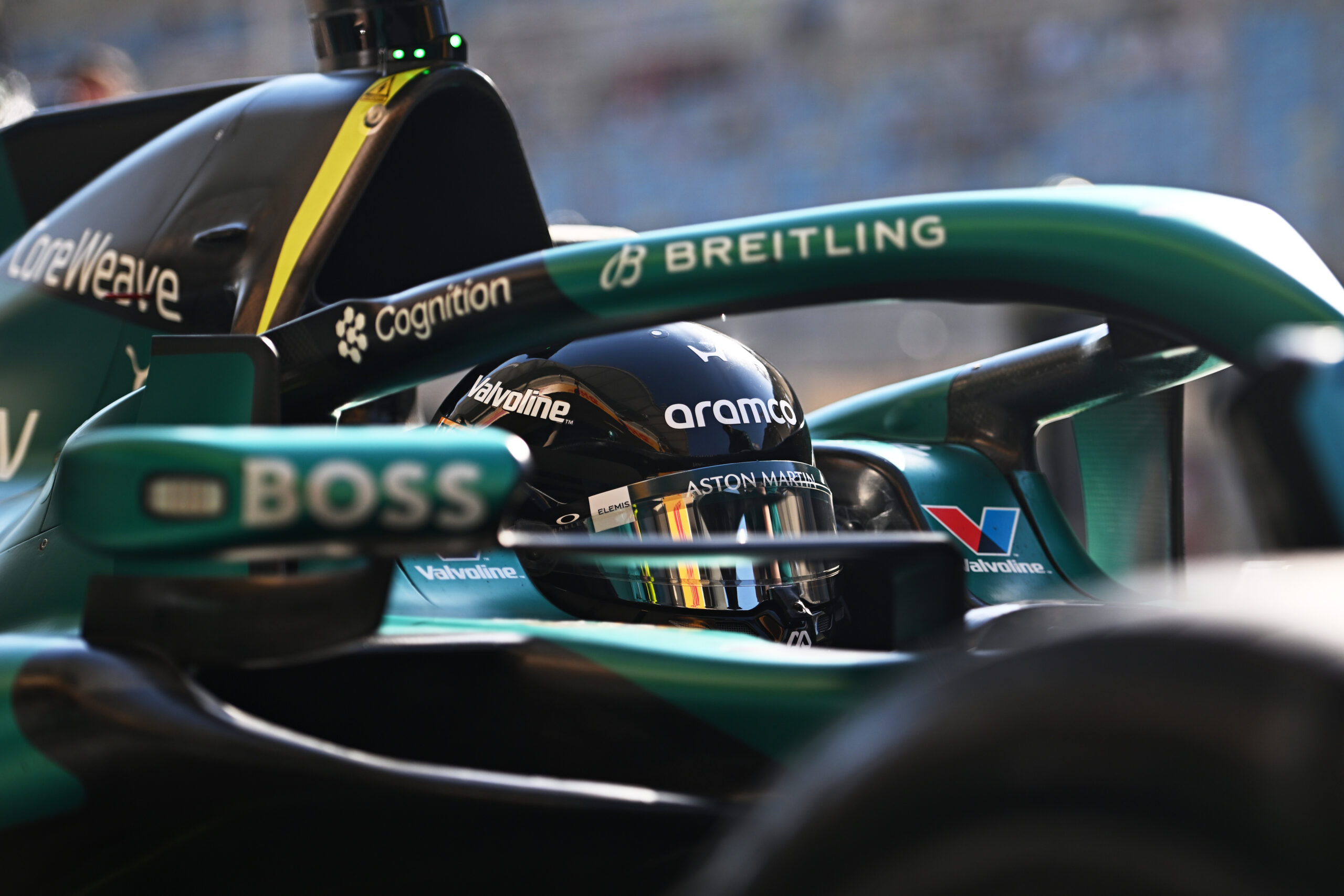
F1’s pre-season testing rarely decides a championship, but it can expose weaknesses, and for Aston Martin and Honda, this Bahrain week did exactly that. Across two tests in the desert, the team logged only 334 laps, the lowest of any team. This left Honda short of the mileage targets it had set ahead of the new F1 season.
Power unit concerns surface
At the Bahrain International Circuit, the final day reflected the broader challenges Aston Martin and Honda faced throughout the F1 testing.
Lance Stroll returned to the AMR26, but a battery-related issue delayed his morning session. The problem had already compromised Fernando Alonso’s running on Thursday.
Honda conducted bench simulations at HRC Sakura before clearing the car to return to the circuit. However, a shortage of power unit parts forced Aston Martin into a limited programme of short stints. In the end the Canadian driver did only six laps.
Shintaro Orihara, Trackside General Manager and Chief Engineer, addressed the situation directly:
“Our main target during this week’s test was to build up mileage on the power unit, check the engine reliability and gather data. We collected data successfully; however, we didn’t achieve the accumulated mileage that we were targeting.
“On Thursday, we identified an issue in the power unit, and all of us have been uniting efforts to find a solution during our last day of testing. Overnight and today, HRC Sakura, the AMRTC in Silverstone and our crews in Bahrain worked together on a limited run plan, which was jointly agreed considering a shortage of parts.
“It has been an enduring week, but we extend our thanks to the team for their support trackside and everyone working in Japan and the UK remotely. Overall, we are not happy with our performance and our reliability at the moment. However, we are all looking for solutions together in Sakura, Milton Keynes and Silverstone.”
Their reliability target was missed, and the deficit would now carry into the opening round.
Aston Martin and Honda on the backfoot before Melbourne
F1 testing allows teams to complete race simulations, tyre comparisons and setup sweeps. Yet, Aston Martin could not execute a full programme while Honda worked through reliability issues. With only 334 laps recorded, the preparation phase felt incomplete.
Mike Krack, acknowledged how the disruption affects Aston Martin’s readiness alongside Honda for the F1 opener in Melbourne:
“We have concluded our test programme in Bahrain, and the main challenge has been dealing with some reliability issues that have limited our time on track. This leaves us on the backfoot going into the start of the season, because we haven’t been able to complete all of the usual tasks typical of winter testing. We recognise there is a huge amount of work ahead, and everyone involved in this project knows where we need to focus to improve our situation. I want to say a big thank you to all my colleagues across the team who have been working day and night over the last two weeks.”
These tests should have reduced the unknowns for the team. Instead, Aston Martin and Honda enter the F1 season still working through them.
Performance still to unlock
Stroll made it clear that performance remains a separate concern for Aston Martin as Honda continues refining reliability ahead of the F1 campaign:
“It’s been a challenging couple of weeks here in Bahrain, and today’s limited running wasn’t the way we wanted to finish the second test. It’s clear the car isn’t where we want it to be performance-wise, and we know there’s a lot of work ahead in the coming weeks and months. There’s a long season ahead, and we’ll keep pushing flat out to unlock more performance.
“I want to say a big thank you to everyone trackside and back at the AMRTC for the work that’s gone in so far. It’s not where we want to be right now, but I know how determined this team is. We’ll stick together, rise to the challenge and keep working until we deliver the performance we are looking for.”
This resolve and determination must translate into reliability. Aston Martin will need Honda’s systems fully stabilised before the first competitive lights go out at the F1 Australian GP.