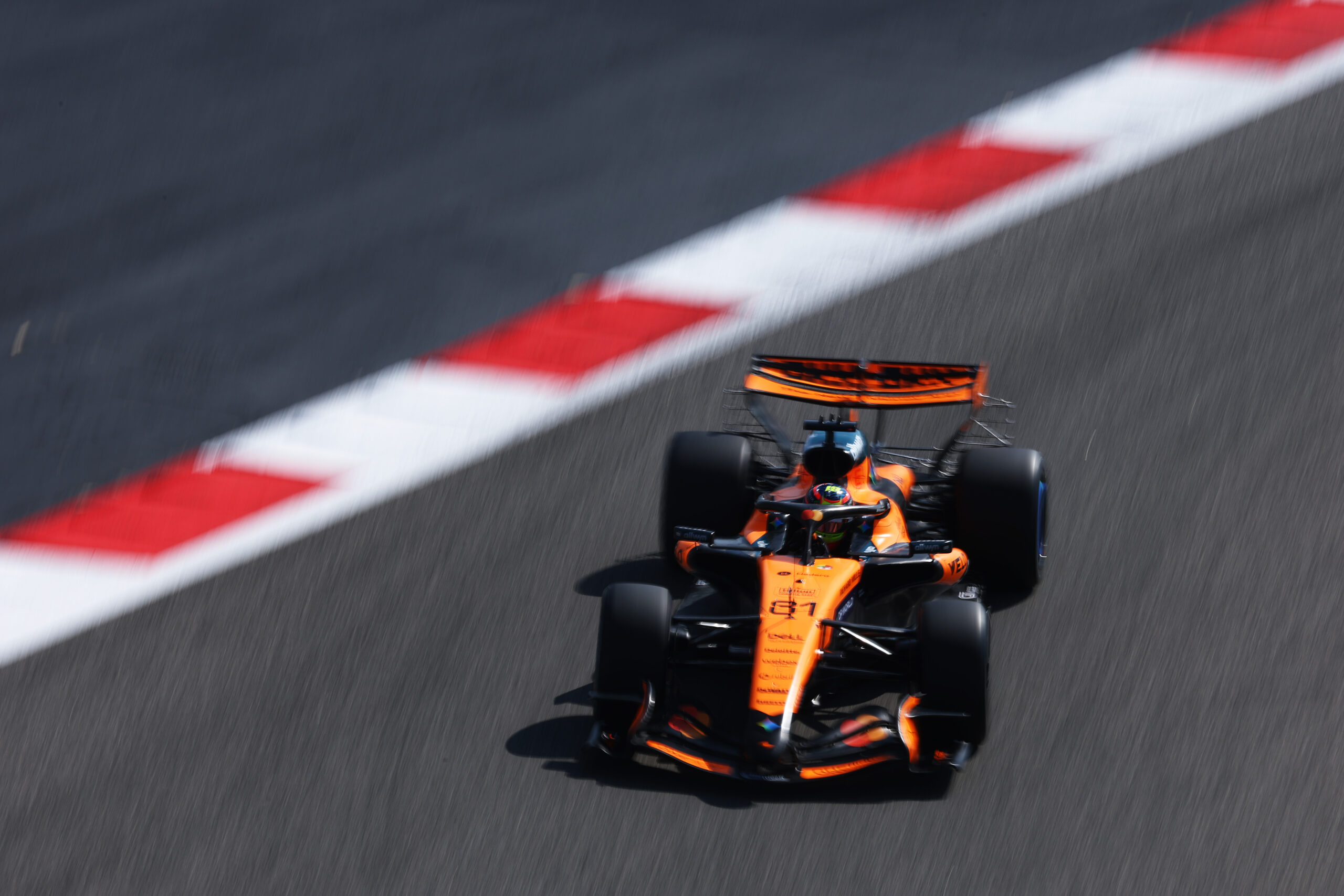
As the first F1 race of the season approaches, Oscar Piastri warns that energy management will define the 2026 hierarchy based on Bahrain Testing. The McLaren driver spent his week analysing the radical shift in power delivery and recovery.
The data collected during the final day of the Bahrain Testing highlights a massive contrast between the different circuit layouts. Piastri immediately noticed that his simulator work felt different from the real-world experience.
“I mean, from the simulator running I’ve done, it’s very different.”
The challenge of energy recovery for Oscar Piastri and the 2026 F1 grid
Oscar Piastri expects certain tracks to expose the weaknesses of the new hybrid systems.
“I think at certain tracks we’re going to be much more harvest limited than we are here.”
Bahrain allows for relatively easy recovery, but upcoming street circuits present a different threat. Piastri compared the current test to the demands of the Australian Grand Prix.
“Here, depending on where you set your optimality, you don’t have to do much super clip or much lift and coast, whereas in Melbourne, I think if you didn’t want to do any, you’d be running out of energy very, very quickly.”
Furthermore, the circuit layout remains the primary cause of these energy deficits. Piastri identified high-speed tracks with few braking zones as the most difficult for the 2026 cars. Jeddah is a big one early in the year.
“Again, it just depends on the layout of the circuit. Jeddah is another one. Places where you have a few straights linked together by fast corners, where it’s very difficult to harvest, that’s where the most, kind of, abnormality is going to come.”
Adapting to the 2026 driver workflow
The new regulations force drivers to rethink how they attack high-speed sections. Piastri admitted that the change in feeling is substantial after doing Bahrain F1 testing.
“So yeah, there’s going to be some big differences, but in saying that, again, you can change things around a lot. We’ve seen people here at Turn 12, you can definitely make it a corner if you want to. It’s a lot harder than it was last year, but at the moment it’s kind of all set before you get in the car.”
Consequently, the workload for the driver has moved away from pure throttle control. Engineers must now finalise complex energy maps before the car even leaves the pit lane. Piastri clarified that the driver has less influence over the immediate recovery cycle.
“You can change it on the fly, but it’s a bit different because you’re not just managing it on the throttle, let’s say.”
Ultimately, the first race in Melbourne remains a major technical unknown for the entire grid. Piastri concluded at the F1 Bahrain Testing press conference,
“Melbourne is going to look quite different, I think, and will be a challenge for us all, I’m sure.”