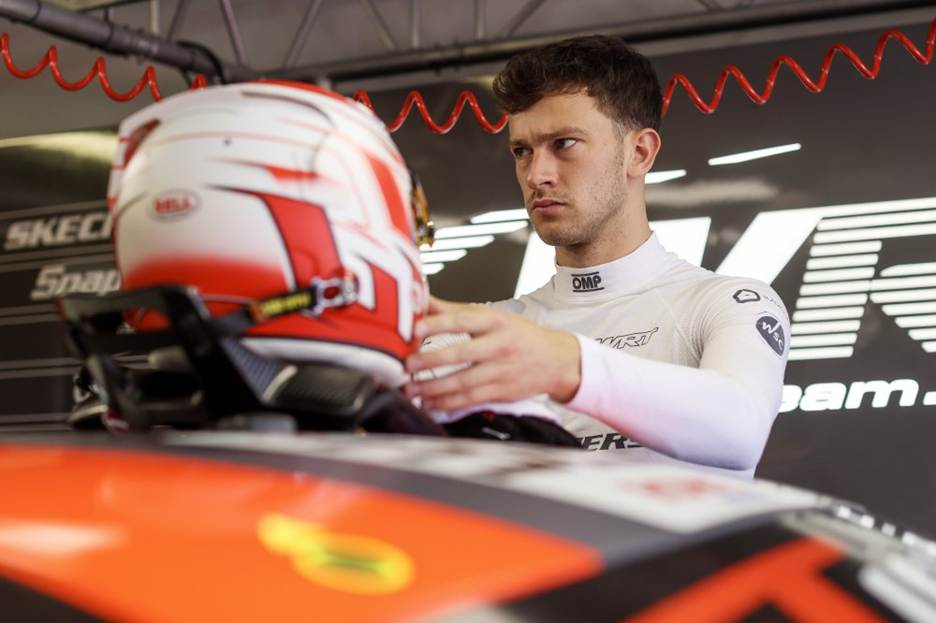
Charles Weerts has established himself as one of the standout figures in the fiercely competitive GT World Challenge Europe, carving out a distinctive identity in international motorsport, and in especially GT Racing. Rather than pursuing the traditional and often unforgiving ladder towards Formula 1 without hesitation, the Belgian evaluated his prospects at an early stage and chose to make a deliberate transition from single-seaters to endurance racing — a decision guided by realism, long-term vision and a clear assessment of opportunity.
Since joining Team WRT in 2019, he has developed into one of the championship’s benchmark drivers, claiming four Sprint Cup titles and, in 2025, securing both the Sprint Cup and Overall championships alongside Kelvin van der Linde, while also finishing third in the Endurance Cup standings. His progression to factory status with BMW M Motorsport further underscores a career constructed not only on raw pace and consistency, but on calculated decision-making and an acute understanding of where his greatest professional opportunities lay.
In an exclusive interview with Pit Debrief, Weerts reflected in detail on his journey into GT racing, his integration into GTWC Europe, and the thought process behind turning away from the single-seater ladder. He explained how committing to sports car racing ultimately provided the clearest and most realistic pathway to fulfilling his ultimate ambition: becoming a professional driver competing — and succeeding — at the highest level of the sport.
Early foundations in Formula 4
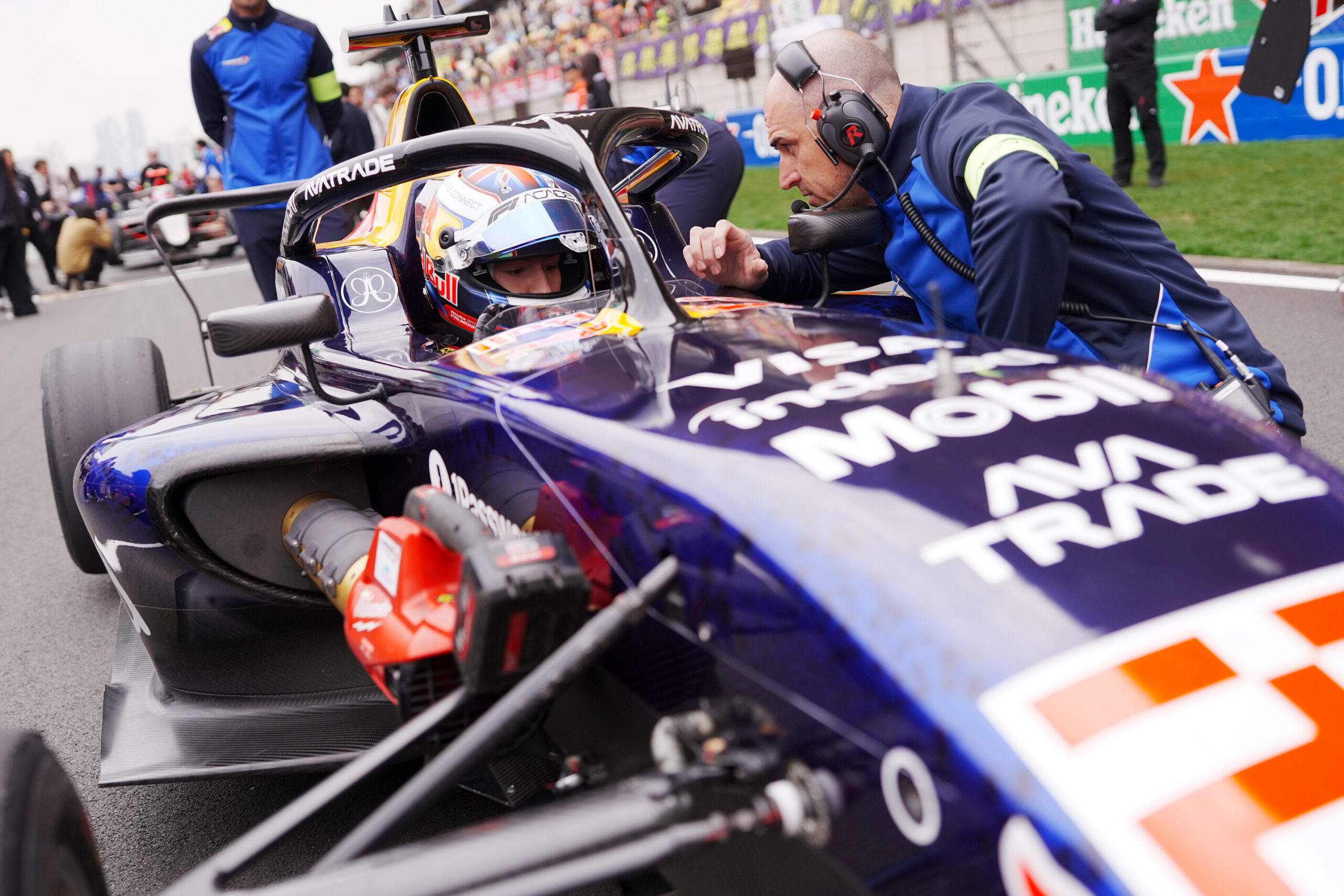
Weerts first made his mark in junior single-seaters with strong performances in both the ADAC Formula 4 Championship and the UAE F4 series. Competing against drivers who would go on to become major names in motorsport, Weerts demonstrated from an early stage that he had the pace, focus, and racecraft to compete at the front.
“I did formula. So, I drove in Formula 4 for two seasons in ADAC. I also won the F4 in the UAE. And to be honest, I had a pretty good season. I was racing with Frederik Vesti and Liam Lawson, which you obviously know, I guess by now, as two of my main mates.”
However, despite his evident speed, Weerts’ results did not always reflect the full measure of his talent. Unforeseen incidents and tough racing weekends occasionally impacted his championship position, leaving him with lessons that would shape his approach to future opportunities.
“In the championship, we actually finished second, fourth and fifth. And I was fifth. But in my defence, I got completely fucked in two races out of six weekends. And I mean, I’m sorry, before you had like three races to qualify, and if you would get shunted off in Race 1, you would not score any points in Race 1 and start last for Race 2. And basically, David Schumacher destroyed two of my race weekends like this. So the championship was a bit harder. But I had a good, strong end of the year. But whatever.”
Even in the face of setbacks, Weerts demonstrated resilience, finishing the campaign on a high note in P5. Those experiences would prove invaluable as he considered the next stage of his career, reinforcing both his determination and strategic thinking.

Weerts on the career crossroads between formula and GT racing
As the season drew to a close, Charles Weerts naturally turned his attention to the next stage of his racing career. On paper, advancing up the formula ladder—toward F3, F2, and eventually Formula 1—seemed like the obvious trajectory for a driver who had consistently excelled. Yet Weerts approached the question of his future with a level of pragmatism and long-term perspective that would ultimately shape his professional path.“So I did Formula 4 and it was going pretty well. So obviously, the question comes and you’re like, ‘Okay, what about now? Do we want to go to F3, F2, F1?’ Obviously, it’s a dream of every driver. But we tried to think a bit further with my dad. And we thought, ‘OK, I mean, what’s the goal? And what do we think is achievable?’”
The practicalities behind the decision
For Weerts, ambition alone was never enough to guide his career. He carefully weighed the financial realities, opportunities for progression, and the likelihood of achieving his long-term goals—a philosophy instilled by his father from the earliest days of his racing journey. GT racing ultimately offered a path where he could pursue his dream of becoming a professional driver while doing so in a sustainable, achievable way, surrounded by people and a racing environment he enjoyed.
“And already in karting, my dad always said it, ‘racing is a very expensive sport, if one day already I don’t have to pay for you to be able to drive, it would be already, it would be incredible.’
He continued, “And so obviously, let alone the fact of being a professional and getting money for racing. And at the end of the day, that was always my goal. It was not especially to drive in Formula 1. Of course, it’s a dream of every little kid. But for me, the most important thing was to enjoy, drive with people that I enjoy driving with.”

The influence of a childhood shaped by endurance racing
Growing up near the iconic Spa-Francorchamps circuit also had a lasting impact on Weerts. The roar of engines and the spectacle of endurance racing were part of his earliest motorsport memories, and he dreamed of competing in the legendary 24 Hours of Spa.
“I also liked endurance racing since I was a kid because, I mean, I’m living in Spa, basically. So I’ve been at the 24 Hours [of Spa] since I was a kid. So I mean, this race was also one of my dream races to participate in once.”
Furthermore, Watching the precision, skill, and professionalism of factory teams and seasoned drivers left a profound and lasting visual impression on him, shaping his aspirations and giving him a clear image of the standard he wanted to reach in his own racing career.
“And ultimately, seeing all those factory drivers — I remember, it’s in my mind — but like the Audi drivers with the red polos. I always thought it was so cool. And I always wanted to be part of that.”
Calculating the move from formula to GT racing
With all those factors at play, when opportunities arose to continue up the single-seater ladder, Weerts and his father approached the decision with a realistic view of the challenges ahead and how the path to Formula 1 would align with his overall long-term goals
“And so we talked with my dad. I was like, ‘Okay, what should we do? We had a really good season in F4. We have possibilities to go to F3. And then, yeah, what’s the point? We want to go to F2 and then, OK, Formula 1. But how much money would we need, first of all, to invest? Two, at the end of the day, what’s the probability of really making it to Formula 1?’”
“We have very limited driving time. And there’s anyway a high chance that ultimately, after those four or five years that you spend, I don’t know, like literally millions, you would anyway come back to GT. And let alone the fact that, obviously, we have the connection with WRT, which makes the whole thing a lot easier.”
The choice: GT Racing the favoured route for Weerts
With all factors considered, the decision became increasingly clear. For Weerts, the path that offered a sustainable professional career, combined with the chance to compete at a high level while enjoying the racing environment, pointed firmly toward sports car racing rather than continuing solely in single-seaters.
“So we all, we just decided, like, ‘OK, let’s be realistic. And if one day I want to achieve my goal, which is to be able to be a professional racing driver, this probability is a lot higher if we go into sports car racing than if we continue to formula cars.’ And that’s the main reason why we switched quite early to GT.”
The decision was not made in isolation; Weerts also looked to drivers who had successfully navigated the same transition. Their careers provided both inspiration and a practical roadmap for how to move from single-seaters to professional GT racing.
“And in my mind, I always had the example of Laurens Vanthoor and also, obviously, Dries — especially Dries, actually — where he also did one or two seasons in formula and then he switched straight away to sports cars. He did, I believe, two seasons as a customer and then he became professional. And I mean, I did basically the same as him.”
By studying these examples, Weerts was able to confirm that switching to GT racing was not a compromise, but a strategic, realistic step toward achieving his ultimate goal: a professional career in motorsport at the highest level.

A dream realised: How Weerts has built his name and reputation in GT racing
With hindsight, Weerts maintains a measured perspective on the path he chose. While some of his former Formula 4 rivals have pursued the Formula 1 ladder, he recognises that not all have sustained a professional racing career. He, however, is living his own dream.
“And this was always my dream. And at the end of the day, with hindsight — I mean, obviously, when I see my teammates also being in Formula 1, it’s fucking cool — but at the same time, I also know the guys who I was fighting with in Formula 4 and are not doing anything anymore.”
Today, as a factory driver who transitioned from Audi to BMW in 2023, Weerts views that early decision to switch to GT racing as both rational and rewarding. The move allowed him to compete at the highest level while shaping a career with longevity and tangible results.
Weerts has since achieved one of his long-standing ambitions: racing in the 24 Hours of Spa every year since 2019, including a podium finish in 2024 alongside Sheldon van der Linde and Dries Vanthoor for Team WRT. Beyond Spa, he has helped his teams secure multiple championship titles, including, most recently, the 2025 GTWC Europe Sprint Cup.
“And so, yeah, it’s quite a long story, obviously. But that’s why I switched to GT, to sports cars. And that’s where I am now. So after two years with Audi, we switched to BMW in 2023. And I think it was quite good.”