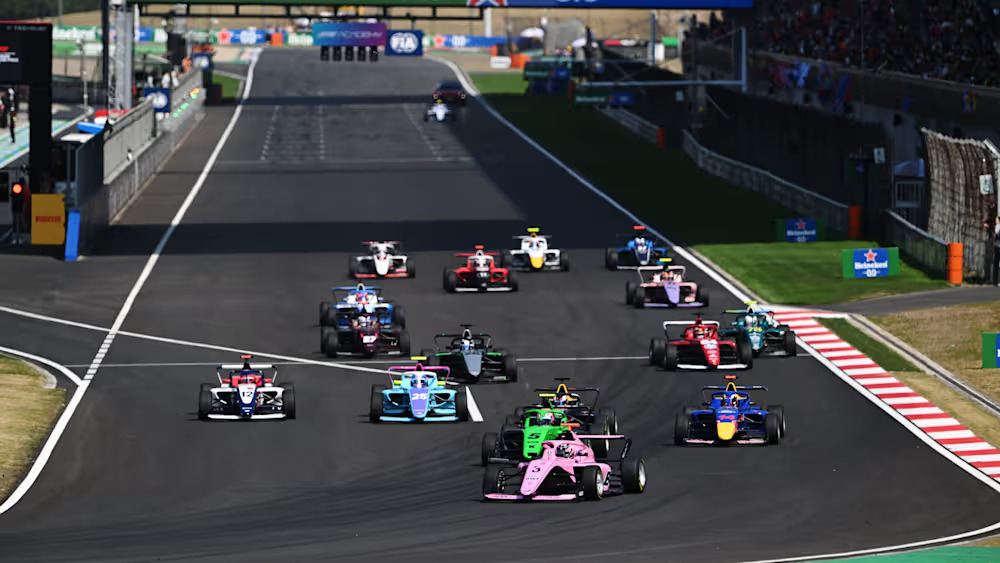
In only a few seasons, F1 Academy has undergone a dramatic transformation. What began as a relatively quiet initiative aimed at supporting young female drivers has rapidly evolved into one of the most influential development platforms in motorsport, which is something Managing Director Susie Wolff has been part of every step of the way in F1 Academy heading into the 2026 season.
Now entering its fourth season, the series is no longer simply about providing track time. Its ambition has expanded into something far greater, creating meaningful opportunities, reshaping perceptions within the sport and building a clearer pathway for young women pursuing professional racing careers.
Launched in November 2022 as a Formula 4-level championship, the category has grown at remarkable speed. According to the 2025 Global F1 Fan Survey, F1 Academy has already become the second-most followed series behind Formula 1 itself.
“Proud of how far we’ve come”
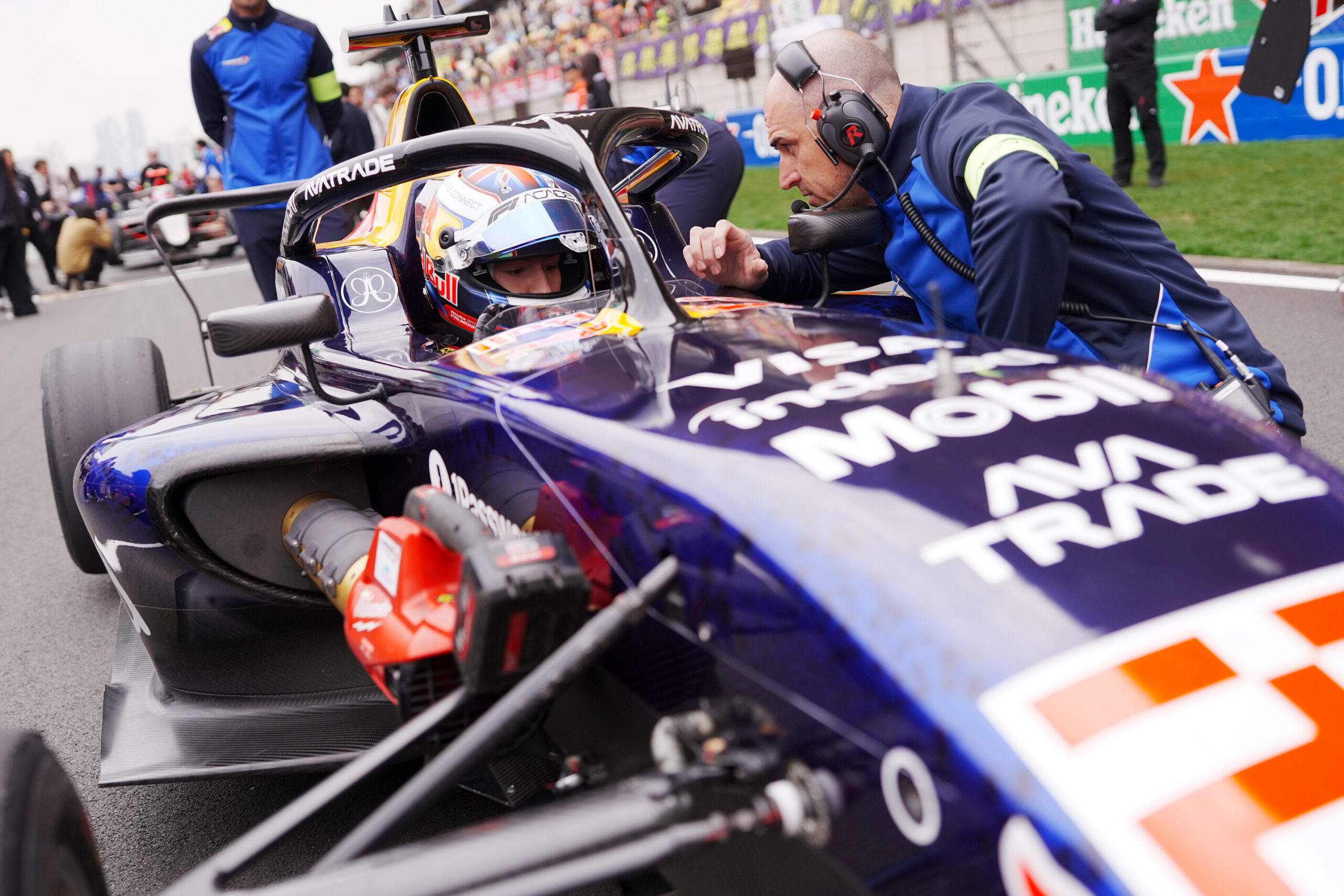
Ahead of the 2026 F1 Academy opening round in Shanghai, Wolff reflected on how quickly the project has developed — and why the work is only just beginning.
“It was up to us to demonstrate that F1, which now has such a strong female fan base worldwide, wants to create opportunity and see more female representation,” Wolff explains.
“We can be proud of how far we’ve come. It’s been a collective effort from Formula 1, from the F1 ACADEMY team and from the F1 teams. There’s been a real shift in the sport and F1 ACADEMY speaks to that.”
“We’re not just giving young women opportunities on-track. We’re proving that this sport is no longer a man’s world. But I’m even more ambitious about what we can go on to achieve in the long term.”
The journey up until now for F1 Academy in 2026
When the series first launched in 2023, visibility was limited. Drivers struggled to secure the funding required to compete, races were held in front of largely empty circuits and fans watching from home had no live broadcast coverage.
Just two years later, the landscape looks dramatically different.
The championship closed its 2025 season under the lights of Las Vegas Grand Prix, delivering a high-profile finale that demonstrated how far the series had come.
That same year saw several major milestones. The championship visited three new circuits, launched its Driver Development Guide, and debuted the Netflix documentary series F1: The Academy.
The introduction of the F1 Academy Rookie Test also provided a clear example of the growing interest around the category, with 18 drivers competing for a chance to secure a seat on the 2026 grid, which is something Wolff is particularly proud of.
“Women’s sport has seen huge investment and growth in popularity and without a doubt this has accelerated our momentum,” notes Wolff. “It’s still early. We’re only in year four, but the scale of F1 ACADEMY’s progress in such a short space of time shows what’s possible when the intent is clear.”
Commercial relevance

Building a long-term championship requires more than sporting credibility, as it must also prove commercially viable. F1 Academy has done exactly that by attracting partnerships that expand the sport’s reach beyond traditional audiences.
One of the most notable examples came with beauty brand Charlotte Tilbury, whose collaboration with the series became 2024’s most engaged motorsport partnership.
The deal challenged long-standing stereotypes about motorsport audiences, proving that glamour and elite competition can coexist.
Further partnerships with Gatorade, Wella Professionals, and a specially designed LEGO F1 Academy racing car have helped broaden the championship’s appeal, particularly among younger fans.
“We can bring collaborations to life which show that feminine and fierce can sit alongside each other, that you don’t need to be a tomboy to like racing,” says Wolff.
“Our partners see the relevance and have chosen to come on the journey with us to build F1 ACADEMY as they see the long-term value. The fact that they’re all showing up is a testament to how much F1 ACADEMY has found its place and is speaking to that new audience of fans globally.”
Another milestone arrived in Las Vegas, where the championship became the only support series racing alongside Formula 1 during the weekend — and the first single-seater category to compete on the iconic Strip circuit.
The event also saw the unveiling of a collaboration with Hello Kitty, which included themed grandstands and the championship’s first merchandise collection.
“The reaction to that collaboration was incredible,” Wolff remarks. “Seeing how strongly it resonated shows we’re tapping into something fresh.”
The next generation
The impact of F1 Academy is being felt well beyond the championship grid itself.
Karting paddocks around the world are beginning to reflect a new reality, where young girls and boys compete side by side without the stigma that once surrounded mixed-gender racing.
“Society has changed,” says Wolff. “When my son races against a girl, it’s not unusual. It’s not a statement, she’s simply another competitor. That mindset shift matters.”
Results on track suggest the next generation is already thriving.
In the Champions of the Future Academy Program, drivers participating in the DISCOVER YOUR DRIVE initiative claimed 25% of the podium finishes in the OK-N Senior category last season.
That strength is reflected in the 2026 F1 Academy grid itself. Eight of the 15 full-time drivers are aged 18 or younger, including five who progressed directly from the Rookie Test. Meanwhile, eight previous Wild Card entries have secured permanent seats.
One of those drivers is Mathilda Paatz, who earned a full-time drive after appearing as a Wild Card in 2025.
Participation numbers rising
Early scepticism about the depth of the driver pool has largely disappeared as participation numbers continue to rise.
“That kept me up at night at the beginning — would there be enough young drivers?” Wolff says. “That’s no longer the worry. At kart tracks, I’ve never seen so many young women racing. I think the creation of role models and the inspiration for the next generation is now increasing our talent pool and is fundamental to the long-term success of F1 ACADEMY.“
“Many young drivers are now connected to F1 Junior Academies earlier in their careers. They have the opportunity from a much younger age to get all of the help and support they need to progress in the sport.”
“Crucially, there is now a visible destination. There’s a defined route – perform in karting, progress to F1 ACADEMY. Deliver there, and the pathway continues. That clarity didn’t exist before.”
Despite the developmental nature of the championship, Wolff stresses that competition remains fierce and selection is always based on performance.
“The opportunity is there, but performance decides. We will always take the best talent globally and aim to have the 18 best drivers at any one time in F1 ACADEMY.”
Valuable stepping stone

For the most successful drivers, F1 Academy is proving to be a genuine stepping stone into higher levels of motorsport.
After securing the 2025 title, Doriane Pin moved into a Development Driver role with Mercedes-AMG Petronas Formula One Team, while also competing in endurance racing, including the 24 Hours of Le Mans and the European Le Mans Series.
Runner-up Maya Weug earned a GT test with AF Corse, the Ferrari-supported team competing in the FIA World Endurance Championship.
Meanwhile, 2024 champion Abbi Pulling progressed to the GB3 Championship with a fully funded seat, where she became the first woman to secure a podium in the series and continues into her second season.
Together, these trajectories underline the series’ growing role as a genuine launchpad for female drivers.
Crafting a calendar with purpose
The 2026 season will visit seven Formula 1 venues, reinforcing the series’ connection to the sport’s biggest weekends.
Among the highlights is a long-awaited debut at Silverstone Circuit, while Circuit of the Americas returns to the schedule for the first time since 2023.
Five events from last season also remain on the calendar, including races at Shanghai International Circuit, Jeddah Corniche Circuit, Circuit Gilles Villeneuve, Circuit Zandvoort, and Las Vegas.
“When we build the calendar, it’s about more than geography,” she explains. “We need to be global. We need strong promoters who believe in the mission. Every year the momentum builds — the crowds get bigger and our impact widens.”
A bigger mission then F1
While discussions around the championship often centre on one question — when a woman might reach Formula 1 — Wolff believes the objective is far broader.
“It simplifies it so much to think that all we can do is get a woman into F1, we can do way more than that” Wolff says. “We can strengthen the entire talent pipeline, We can build a commercially sustainable model. We can reshape how this sport connects with new audiences.”
“If we do our job, getting a woman into Formula 1 will be inevitable. But our responsibility is broader than that. It’s about creating structural change — and ensuring the most talented young female drivers have a genuine chance.”
The long-term vision extends beyond a single driver or season. F1 Academy is laying the foundations for a future where young girls watching motorsport can see a clear path to the top — and believe they belong there.